



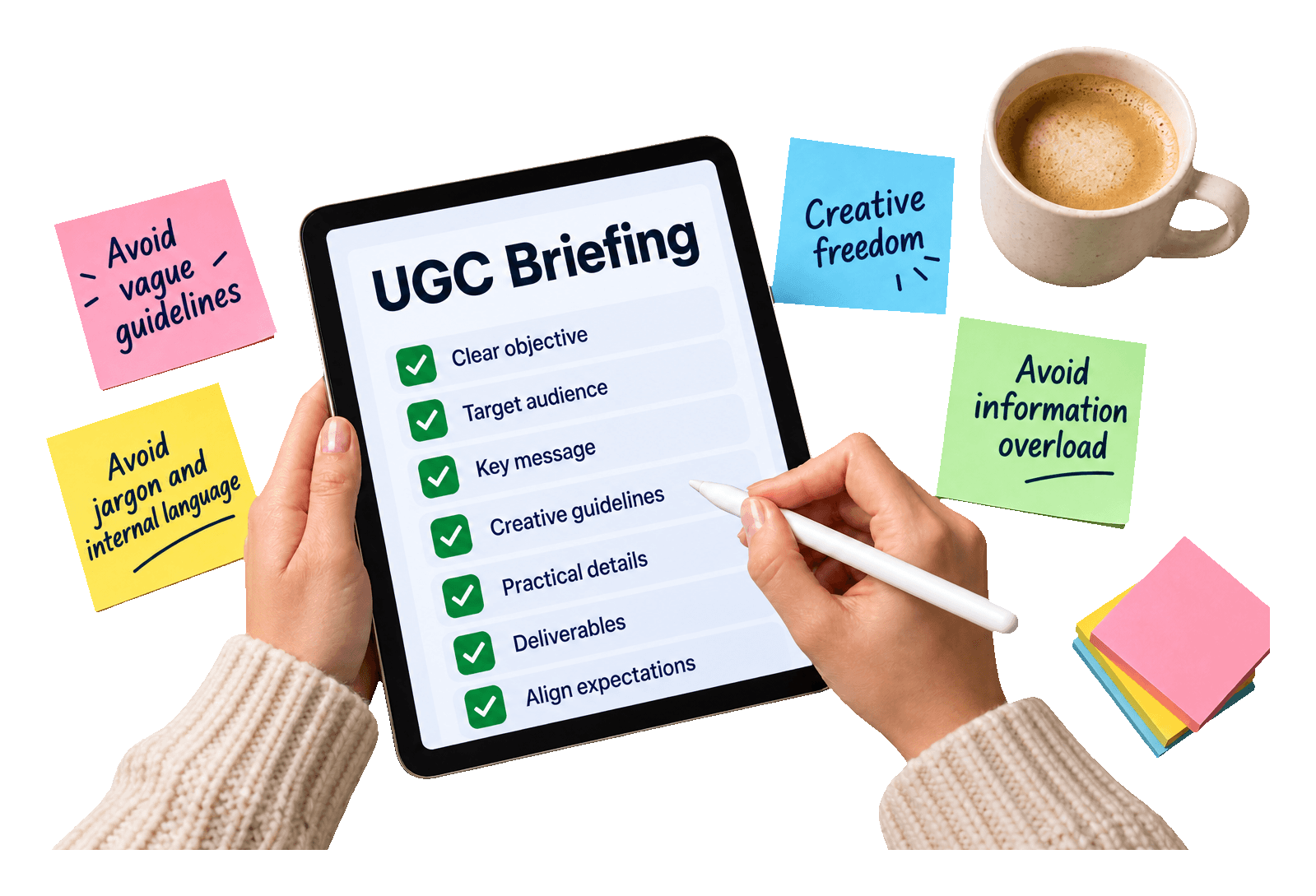
An effective UGC brief is the backbone of a successful campaign. It ensures that the creator knows exactly what is expected of them, aligning the final result with the brand vision.
Unfortunately, many brands still make mistakes in their UGC briefings, leading to misunderstandings, delays, and suboptimal content. At UGC.NL, we understand the importance of a good briefing and offer tools to optimize it.
TL;DR
- A vague or overloaded UGC brief leads to delays and extra revisions, which can derail your campaigns.
- A clear and focused UGC brief ensures faster collaboration and better performance.
- Avoid jargon and information overload to give creators the freedom to create authentic content.
In this article, we discuss the most common mistakes in UGC briefings and how you can avoid them to improve your campaigns.
Avoiding Vague Guidelines
A common mistake in UGC briefings is providing vague guidelines. Instructions like 'make it fun' or 'show the product' are too open and can lead to different interpretations by creators.
It's important to be clear about the target audience and the message you want to convey. The more specific you are, the more likely the content will align with your brand.
Be specific
Be specific about which emotions you want to evoke and which elements are essential. This helps stimulate creativity without the creator going in the wrong direction.
An example of a clear guideline could be: 'We want the viewer to feel inspired by our product and for its benefits to be clearly presented in a home setting.' By providing such specific guidelines, you help the creator hit the right tone and atmosphere.
At UGC.NL, we advise using our templates that help you formulate your guidelines clearly and structured. This prevents confusion and ensures the creator knows exactly what is expected of them.
A pitfall when drafting guidelines is not considering the cultural context of the target audience. What is seen as funny or appealing in one country may be misinterpreted in another. At UGC.NL, you can select creators familiar with the cultural nuances of your audience, making your content more relevant and effective.
Including Essential Elements
Omitting important details like your **value proposition** or the desired platform format can leave creators in the dark. This often leads to poorly performing content.
Ensure you include all essential elements in your briefing to avoid wasting time and resources on unnecessary revisions.
Clear expectations
Set clear expectations and ensure all parties agree on what success means for the campaign.
A good example of including essential elements is mentioning specific product features that need to be highlighted, such as 'Ensure the watch's water resistance is clearly shown.' These details help the creator focus on what truly matters.
At UGC.NL, we recommend using a checklist to ensure no essential element is overlooked. This helps not only in drafting a complete briefing but also in evaluating the final content.
Another important element is specifying the use of music and visuals. Creators need to know if they should use specific music or if they have freedom in their choice. At UGC.NL, you can easily capture these details in the briefing, preventing misunderstandings about copyrights or brand consistency.
Aligning Expectations
Another mistake is not aligning expectations within the team. Sometimes teams want authentic content but secretly expect a polished advertisement.
This can lead to confusion among creators and inconsistent results. Ensure everyone on your team shares the same definition of success before sending out the briefing.
Internal alignment
Internal alignment prevents you from having to change course midway through the campaign, saving time and resources.
An effective way to align expectations is by organizing a kick-off meeting where all team members share their vision and goals. 'We want the content to reflect the spontaneity and authenticity of our brand, without too much focus on perfection,' can be a clear message shared.
UGC.NL offers tools for team communication that help streamline these processes, ensuring everyone is on the same page before the briefing goes to the creator. This results in a more efficient workflow and better outcomes.
When aligning expectations, it's also crucial to consider the available resources and time. Ensure expectations are realistic in relation to the budget and timeline. UGC.NL provides tools to easily manage and adjust these parameters, keeping you within the possibilities of your campaign.
Avoiding Information Overload
It's tempting to overload a briefing with information, but this can obscure the core message. An effective briefing is concise and focuses on the essentials.
Try to concentrate on what is truly important for that specific content. This helps creators focus on what really matters.
Focus on the essentials
Keep the briefing concise and focused, so creators know what to produce without being overwhelmed by details.
An effective way to avoid information overload is by structuring your briefing into clear sections, such as objectives, target audience, and core message. This makes it easier for the creator to identify the key points.
At UGC.NL, we advise using visual aids like infographics or bullet points to simplify complex information. This not only makes the briefing more accessible but also more appealing to the creator.
A common mistake with information overload is not prioritizing core messages. It's essential to identify the main message and make it central in the briefing. At UGC.NL, we help you define and emphasize these core messages, ensuring your content always has the desired impact.
Avoiding Jargon and Internal Language
Using jargon and internal language can be confusing for creators unfamiliar with your organization. This can lead to misunderstandings and suboptimal content.
Use simple, audience-focused language to ensure everyone is on the same page. The clearer your words, the more creative freedom creators have to tell your story authentically.
Simple language
Avoid abbreviations and keep everything simple and clear to improve communication and achieve better results.
An example of avoiding jargon is instead of saying: 'Use the USP's of our brand in the CTA', say: 'Emphasize the unique benefits of our product in the call to action.' This makes the instructions much clearer for someone unfamiliar with marketing terminology.
UGC.NL offers a handy list of common terms and their simple alternatives that you can use to make your briefing more accessible to a broad audience.
Avoiding jargon also means you can use visual examples to make your point clear. Images can often say more than words and help clarify your instructions. At UGC.NL, you can easily add visual references to your briefing, significantly improving communication with creators.
The Importance of Creative Freedom
Finding a good balance between providing guidelines and offering creative freedom is essential for successful UGC campaigns. Too strict guidelines can limit the creator's creativity and result in generic content. At UGC.NL, we encourage companies to leave room for the creator's unique style and ideas, often leading to more authentic and engaging content.
A practical example of giving creative freedom is allowing different interpretations of a brand message. Instead of dictating how a product should be presented, you can give the creator the space to share their own vision. This can result in surprising and innovative content that highlights your brand in a new way.
UGC.NL supports this approach by providing companies with tools that help establish essential guidelines while leaving room for the creator's personal touch. This ensures a dynamic collaboration where both parties can leverage their strengths.
Optimizing Feedback and Revisions
The feedback process is a crucial part of the collaboration between brands and creators. Clear and constructive feedback can significantly improve the quality of the final content. At UGC.NL, we offer a structured revision process that helps companies communicate their feedback effectively without overwhelming the creator.
An effective way to provide feedback is through specific suggestions instead of general comments. For example, instead of saying 'I don't like it', you can indicate which specific elements could be improved, such as the lighting or the chosen music. This makes it clearer for the creator what is expected of them.
UGC.NL facilitates these feedback loops with an integrated chat and revision system, allowing companies and creators to communicate easily and make adjustments. This leads to smoother collaboration and a final product that better aligns with the brand vision.
Collaborative Reviewing
Before sending out a briefing, it's helpful to collaboratively review it. Ask one or two teammates to review the briefing for clarity and completeness.
This can help identify gaps or contradictions early on, saving you time later. A joint review ensures the briefing is clear and effective.
Collaboration
Front-end collaboration saves time once production begins and ensures the briefing is clear and actionable.
A practical example of collaborative reviewing is using a shared document where team members can leave comments and suggestions. This creates a dynamic feedback process that refines the briefing before it goes to the creator.
At UGC.NL, we encourage the use of our platform tools that facilitate collaboration and feedback. This ensures all stakeholders can provide their input and that the briefing is optimal before it is sent.
An effective collaborative review can also include the use of feedback rounds. By scheduling multiple feedback moments, you ensure all team members have the opportunity to provide their input. UGC.NL facilitates these feedback rounds with tools that make it easy to centralize and manage comments and suggestions.
Available Now
Start improving your UGC briefings today and discover the power of UGC.NL. Discover it yourself
Frequently asked questions
UGC.NL offers tools and guidelines to optimize your briefing, allowing you to communicate clearly and effectively with creators.
At UGC.NL, you can have videos made starting at €59 each, with no subscription fees.
The average delivery time for videos via UGC.NL is 3 to 5 days, depending on the complexity of the assignment.
Avoid vague instructions, jargon, and information overload. Keep the briefing clear and focused on the core message.
Ensure internal alignment within your team about the goals and expectations before sending the briefing to the creators.